

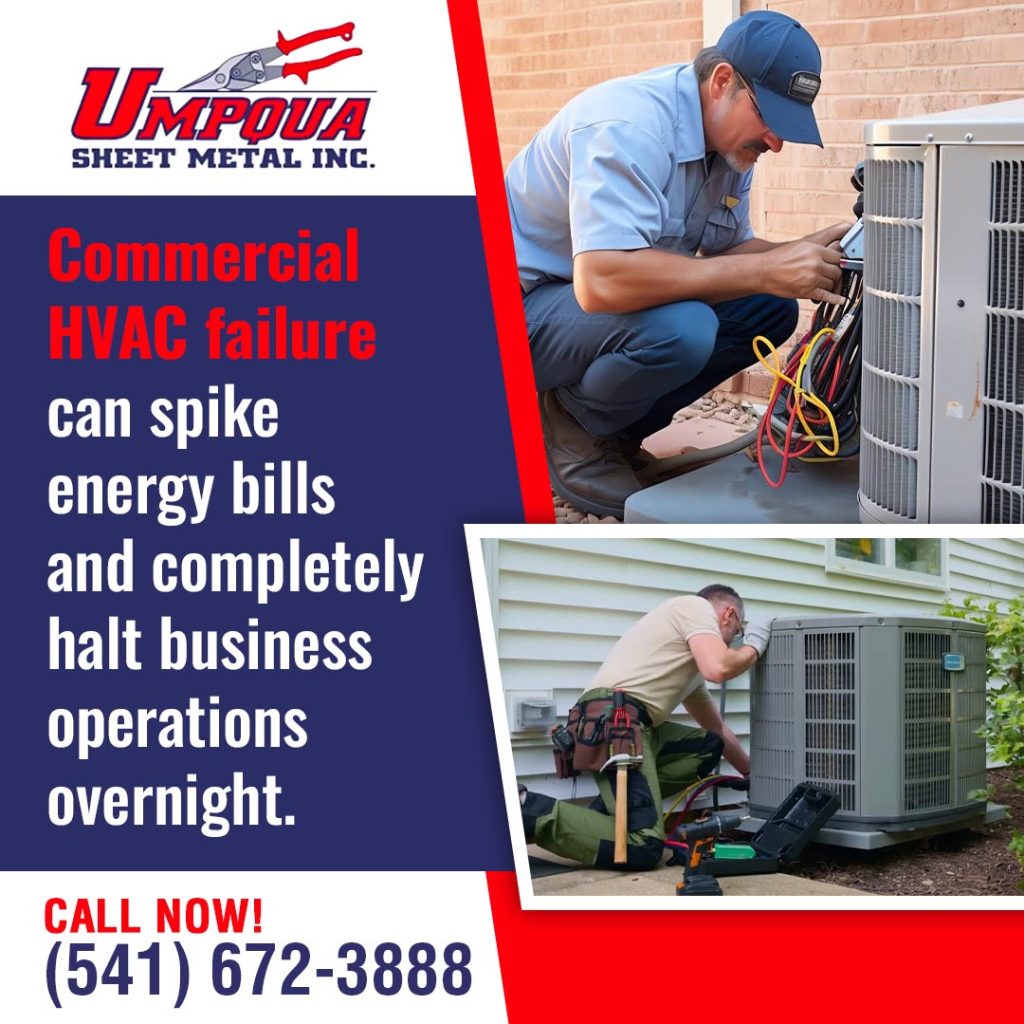
Your business needs emergency HVAC repair when the system makes grinding noises, blows weak air, short cycles, spikes energy bills, or shuts down completely. Umpqua Sheet Metal, Inc. helps Roseburg business owners catch these warning signs early. Don’t wait for a full breakdown. Spotting trouble now keeps your building comfortable, safe, and running smoothly for employees and customers alike.
What Indicates a Failure of the HVAC?
Most commercial HVAC systems give clear signals before they fail. Early detection of these indicators can prevent an unplanned shutdown during business hours.
Watch for these five warning signs:
- Strange noises such as grinding, banging, or screeching coming from the unit
- Weak or inconsistent airflow from vents throughout the building
- Frequent short cycling, in which the system turns on and off repeatedly
- A sudden spike in energy bills without a clear explanation
- Complete system shutdown or failure to turn on at all
If you notice even one of these signs, it’s worth having a professional take a look before the problem grows.
Why Noises and Airflow Issues Matter Most
Strange noises and weak airflow are often the earliest indicators of a failing component, such as a worn belt, a struggling motor, or a blocked duct. Left unaddressed, these small issues tend to escalate into larger, more expensive repairs.
Why Do Emergency Repairs Cost More Than Regular Maintenance?
Emergency HVAC repairs almost always cost more than scheduled maintenance because failures tend to happen at the worst possible time, and rushed repairs often require overtime labor or emergency parts sourcing. According to the U.S. Department of Energy’s Better Buildings Solution Center, organizations can save 5 to 20 percent annually on energy bills by following best practices in HVAC operations and maintenance.
| Factor | Scheduled Maintenance | Emergency Repair |
| Average cost | Lower, predictable | Higher, variable |
| Response time | Planned in advance | Immediate, often after hours |
| System lifespan impact | Extends lifespan | May shorten lifespan if delayed |
| Business disruption | Minimal | Can halt operations |
Routine inspections through a commercial HVAC maintenance program are one of the simplest ways to avoid emergency costs altogether.

When Should I Call HVAC Technicians for Emergency Service?
You should call for emergency service as soon as you notice a system shutdown, unusual smells, or any sign that indicates a safety risk, such as burning odors or visible sparks. Our HVAC technicians recommend not waiting until the next business day if your building’s temperature control has stopped working entirely.
For businesses in Roseburg and the surrounding area, having a trusted HVAC repair in Roseburg on call means faster response times and fewer surprises.
Frequently Asked Questions
How much does emergency HVAC repair typically cost?
Costs vary based on the issue, but emergency service calls generally include a higher service fee than scheduled appointments due to after-hours response.
Does the warranty cover emergency HVAC repair?
Some repairs may be covered if the unit is still under manufacturer or labor warranty. It’s best to check your documentation or ask your technician directly.
How quickly can a technician arrive for an emergency call?
Response times depend on your location and current demand, but most emergency HVAC companies aim to respond within a few hours.
Can my business operate without HVAC while waiting for repairs?
This depends on your industry and local regulations. Businesses with temperature-sensitive inventory or high occupancy should treat HVAC failure as urgent.
Don’t Wait Until It’s an Emergency
Catching these five signs early can save your business time, money, and unnecessary downtime. Umpqua Sheet Metal, Inc. has served Roseburg and the surrounding area for nearly 20 years with reliable commercial HVAC service. Call us today at (541) 672-3888 or email jand@usmhvac.com to schedule an inspection or request emergency repair.